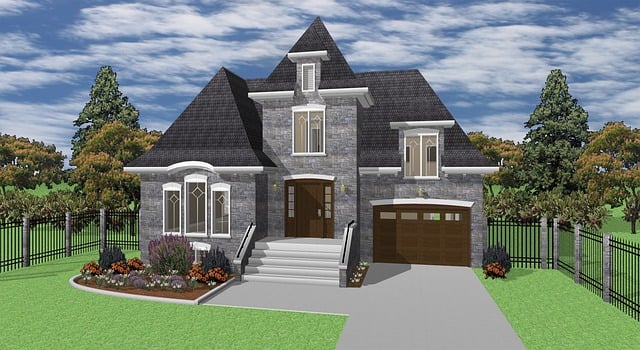
Real Estate professionals use comparable sales analysis to accurately value properties by comparing similar homes based on size, location, features, condition, and market trends. They leverage public records, real estate platforms, and local agent knowledge for data. A multi-source approach ensures maximum accuracy in a dynamic market. Appraisers employ specialized software and human expertise for precise valuations, benefiting homeowners, lenders, and investors.
In the dynamic landscape of real estate, accurately assessing comparable property values is a cornerstone for informed decision-making. This critical process informs pricing strategies, investment opportunities, and market trends. However, navigating the complex web of local markets can be challenging, often leading to discrepancies in valuations. To address this issue, professional appraisers play a vital role in providing unbiased, data-driven insights.
This article delves into the methodologies and expertise required for precise comparable home price assessments, offering valuable insights for both industry professionals and informed homeowners alike. By exploring evidence-based practices, we aim to enhance understanding of this essential process in today’s competitive real estate market.
Understanding Comparable Sales Analysis in Real Estate

In real estate, understanding comparable sales analysis is a cornerstone for professional appraisals. This method involves evaluating properties that are similar in terms of size, location, features, and condition to determine a given property’s value. By comparing recent sales data of comparable properties, agents, appraisers, and buyers can gain valuable insights into the market dynamics and establish a fair asking price. For instance, let’s consider a single-family home in a suburban area. To accurately assess its value, an expert would compare it to other recently sold homes within the same neighborhood, considering factors such as square footage, number of bedrooms and bathrooms, age, and any special features or upgrades.
The process requires meticulous attention to detail and a deep understanding of the local real estate market. According to industry reports, comparable sales analysis has been shown to provide the most accurate appraisals when conducted properly. However, it’s crucial to look beyond just surface-level similarities. Factors like market trends, economic conditions, and specific amenities can significantly influence property values. For example, a home located near top-rated schools or with easy access to major transportation routes may command a higher price compared to an identical property in a less desirable area. Professionals must also account for any unusual sales patterns or market anomalies that could skew the data.
Actionable advice for both real estate professionals and buyers is to work with experienced agents who have a deep knowledge of the local market. These experts can gather and analyze the most relevant comparable sales data, ensuring an accurate assessment. Additionally, utilizing online tools and databases dedicated to real estate analytics can provide valuable insights. By combining these resources, individuals can make informed decisions, whether it’s setting a competitive listing price or negotiating for the best possible purchase. This meticulous approach ensures that both sellers and buyers receive a fair deal in today’s dynamic real estate landscape.
Gathering Data: Sources for Accurate Home Price Comparisons

Professionals involved in real estate naturally rely on a robust data gathering process to make informed decisions when assessing comparable home prices. The foundation of this process lies in accessing accurate and up-to-date information from various sources. Public records, such as those maintained by local government agencies, are invaluable. These records include property tax assessments, sales transactions, and zoning data, all of which provide crucial insights into property values within specific neighborhoods. Additionally, real estate listings platforms offer a wealth of data on recent sales, active listings, and market trends, enabling professionals to compare similar properties and identify patterns.
Beyond public records, industry-specific databases like Zillow, Redfin, or local multiple listing services (MLS) play a pivotal role in gathering comparable data. These platforms aggregate sales information from various sources, ensuring broader coverage and enhanced accuracy. For instance, an appraiser assessing a property’s value might consider sales of comparable homes within a one-mile radius, factoring in square footage, number of bedrooms, age, and recent renovations to arrive at a precise estimate. Furthermore, local real estate agents with deep market knowledge can provide valuable insights on upcoming listings and sold properties, offering firsthand data that complements digital sources.
To ensure the highest level of accuracy, professionals should employ a multi-source approach, validating data from multiple platforms and cross-referencing against historical trends. This comprehensive strategy not only enhances the reliability of comparable price assessments but also helps in navigating the dynamic real estate market with confidence. By leveraging these diverse sources, experts can deliver well-informed opinions, fostering trust among clients and stakeholders alike.
Interpreting Results: Evaluating Comparable Property Values

When assessing comparable home prices, professional real estate appraisers follow a meticulous process to interpret results accurately. They analyze various data points beyond mere square footage or number of bedrooms. Market trends, location-specific factors, property condition, and recent sales of similar properties are all crucial considerations. For instance, in urban areas with high demand for housing, even minor updates to a comparable property can significantly impact its value. Appraisers must account for these nuances to provide an unbiased estimate that aligns with the real estate market’s current dynamics.
Interpretation involves comparing the subject property to similar ones that have recently sold within a reasonable distance and under comparable circumstances. This process, known as “comparables analysis,” is fundamental in determining a home’s value. Factors such as school districts, neighborhood amenities, and proximity to transportation can dramatically influence pricing. For example, a home near a prestigious school might command a higher price than an identical one located just blocks away but within a different school district. Understanding these variations requires deep knowledge of the local real estate landscape.
To ensure accuracy, appraisers employ specialized software that helps in data management and analysis. These tools facilitate precise adjustments for various attributes, enabling them to generate tailored valuations. However, human expertise remains indispensable. Appraisers must exercise judgment, considering unexpected factors like unique architectural features or potential future developments in the area. This blend of technology and experience ensures a comprehensive evaluation that is both reliable and relevant in today’s dynamic real estate market. By meticulously interpreting comparable property values, professionals provide homeowners, lenders, and investors with valuable insights for informed decision-making.