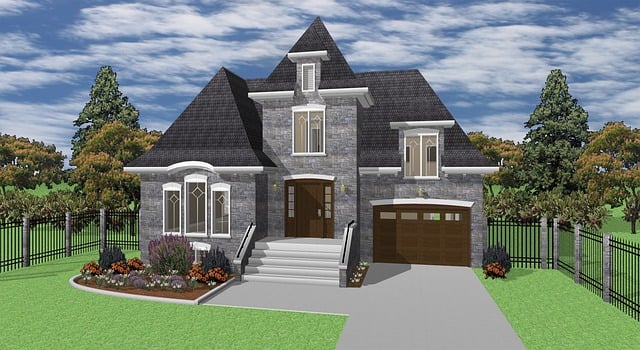
Real Estate appraisals require a multi-faceted approach combining tangible (size, location) and intangible (market trends, neighborhood dynamics) factors. Appraisers use historical sales data of comparable properties for benchmarks, analyzing features, pricing trends, and sale conditions. Environmental factors and local developments impact property values, necessitating regular updates.
Comprehensive property analysis involves examining location demographics, physical attributes, market history, and demand to accurately assess value. Market trend analysis using historical data aids in predicting current and future values. Advanced analytics provide data-driven insights for informed decisions.
Expert appraisals consider local trends, comparable sales, property features, and market demand for unbiased valuations. Tools like Automated Valuation Models (AVMs) require human calibration for unique properties. Continuous adjustments are crucial due to market fluctuations, ensuring accurate reflections of real estate dynamics.
In the dynamic landscape of real estate, accurately determining fair market property value is a cornerstone of transparent and equitable transactions. However, the process is fraught with complexities, from varying local markets to evolving property conditions. This challenges traditional assessment methods, leaving room for discrepancy and mistrust. To address this, our authoritative article delves into the intricate factors influencing property value, offering a comprehensive framework for precise evaluation. By exploring advanced techniques and leveraging data-driven insights, we empower professionals and enthusiasts alike to navigate the real estate market with newfound confidence and clarity.
Understanding Key Factors in Real Estate Appraisals

Determining fair market property value is a meticulous process that hinges on a comprehensive understanding of various key factors unique to real estate appraisals. These factors encompass not just tangible attributes like size, location, and condition but also intangible aspects such as local market trends, economic conditions, and neighborhood dynamics. For instance, a property’s proximity to top-rated schools or major transportation hubs can significantly boost its value, as evidenced by recent studies showing that locations with excellent amenities consistently command higher prices in metropolitan areas across the globe.
Expert appraisers must consider historical sales data of comparable properties within the immediate vicinity to establish a benchmark for valuation. This comparative analysis involves meticulous examination of features, pricing trends, and sale conditions to arrive at an accurate estimate. For instance, a real estate professional might compare a subject property with recently sold homes that share similar characteristics, factoring in age, square footage, architectural style, and any upgrades or renovations made over time. By doing so, they can adjust for discrepancies and arrive at a just market value.
Furthermore, environmental factors and neighborhood improvements play a pivotal role in real estate appraisals. Changes in the surrounding landscape, such as new construction projects, urban renewal initiatives, or infrastructure developments, can dramatically impact property values. Appraisers must stay abreast of these dynamics to ensure their analyses remain current and accurate. For example, a property located adjacent to an upcoming public works project might see its value increase due to improved accessibility and infrastructure, whereas a similar property in the path of a planned development could face depreciation.
Completing a Comprehensive Property Analysis

Determining fair market property value involves a meticulous process known as comprehensive property analysis, which serves as the cornerstone for accurate real estate appraisals. This approach encompasses an in-depth examination of various factors influencing a property’s worth. Experts delve into aspects such as location, market trends, property condition, and comparable sales to paint a holistic picture. For instance, analyzing neighborhood demographics and nearby amenities can significantly impact a home’s desirability and value—a quiet suburban area with top-rated schools might command a higher price than an urban center lacking similar attractions.
A comprehensive analysis includes assessing the physical attributes of the property. This involves evaluating structural integrity, architectural style, and any recent renovations or upgrades. For example, a well-maintained historic home with original architecture and modern updates could present a unique selling point, justifying a premium price. Similarly, examining the land itself—its size, topography, and zoning regulations—is crucial. A spacious lot with potential for development might carry additional value, especially in areas where real estate is scarce.
Furthermore, appraisers must consider market dynamics over time. Studying historical sales data and identifying patterns can help predict current and future trends. For instance, a steady increase in property values within a specific region indicates a robust market, while sudden spikes or declines might signal anomalies worth investigating. Integrating advanced analytics and data-driven insights allows professionals to make informed decisions, ensuring that the final property valuation is not just accurate but also defensible in today’s competitive real estate landscape.
Verifying and Adjusting for Accurate Market Value

Verifying and Adjusting for Accurate Market Value in Real Estate involves a meticulous process that goes beyond surface observations. It demands a deep understanding of local real estate trends, comparable sales data, and unique property characteristics. Experts in this field scrutinize various factors such as location, condition, amenities, and market demand to arrive at an unbiased assessment. For instance, a property’s proximity to top-rated schools or major transportation hubs can significantly influence its value; similarly, recent renovations or updates may boost the market appeal and price point.
Real estate professionals employ advanced tools and methodologies like Automated Valuation Models (AVMs) that analyze historical sales data, property features, and market trends to generate estimated values. However, these models should be refined with human expertise to account for anomalies or unique circumstances. For example, a luxury estate with bespoke features may not align perfectly with AVM outputs; in such cases, an experienced appraiser can fine-tune the assessment by considering the specific market dynamics of high-end real estate.
Adjustments are crucial throughout the process. Market fluctuations, economic conditions, and neighborhood developments can alter property values over time. Regular updates to comparable sales data ensure accuracy, while adapting to changing market realities allows for a more precise valuation. For instance, a property’s value might appreciate due to rising local demand or depreciate if structural issues arise. Staying agile and informed is essential for real estate professionals aiming to provide fair and accurate market values to their clients.